| |
The Spray Q&A: Koren Zailckas
October 31st, 2006 at 15:30 by C J Davies
You know - despite spending a good deal of our time
either looking up weird websites or thinking of new
ways to insult Mariah Carey - we're a literary bunch
here at hecklerspray.
That - book-readin' and stuff - is how we discovered
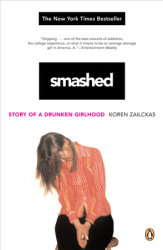
the frankly brilliant Koren Zailckas, whose memoir
Smashed is one of the most eye-opening, honest and
exceptionally well-written things we've clapped our
eyes on in many a month.
We caught up with Koren to chat about alcohol abuse,
flag-burning, the rubbishness of Jonathan Franzen,
Finding Forrester, Johnny Cash and all the fun stuff
in between. And you know what? We've only gone and
put it online for the whole bloody world (well, about
60,000ish of you per day) to read.
That's how nice we are.
To those readers unfamiliar with you or your work,
how would you describe yourself?
Me? I'm just a literary girl gone wrong. Slow with
the tongue. Quick with the pen. Undeniably cute. But,
on the whole, ill-equipped for the privilege of living.
'Smashed' is very much a confessional tome to say
the least. Was there a catharsis to be had writing
it?
All said and done, I'm reluctant to say
writing 'Smashed' was cathartic. For one, I think we
assign that term to women far more often than we assign
it to men. All too often, men's works are deemed "literature" and
women's are dismissed as "therapy." On a
personal level, sure, it's easier to discuss old indignities.
Talking, for instance, about a horrifying blackout
doesn't rattle me the way it used to. (To be honest,
it moves me little more than talking about today's
chance of rain.)
I'm not convinced I've come to term with old aches
as much as I've had to numb myself to them for the
sake of spreading the book's message. Ultimately, I
think a memoir leaves its author with more terror than
comfort, more questions than closure. More than anything,
I feel a growing breach between "me" and
the "me" on the page. It's an occupational
hazard, I guess. I feel sort of exiled from my own
experiences.
Do you find the same sort of catharsis/emotional impact
from writing fiction?
For me, fiction-writing is about escapism. Whereas
memoir-writing is about facing cold, harsh realities.
I'll let you guess which one is more of a party
Naw, in reality, there are challenges to both. In memoir,
there's the burden of truth. And in fiction, there's
the burden of fantasy.
Me, I find fiction harder. There are so many possibilities
in fiction. The story can go absolutely anywhere. And
that overwhelms me. That strikes fear in my timid,
little heart. I like being restricted to the cage of
fact, the coop of reality. Without it, I feel a certain
agoraphobia.
I panic whenever I write fiction. I put my thumb in
mouth; I curl up like Sean Connery at Madison Square
Garden in "Finding Forrester."
Are you working on fiction now? Has your prose style/working
method changed with this?
Right now I'm working on another book of non-fiction.
It began as a memoir about my experiences with anger
and aggression. Beneath my mild, sweet-tempered veneer,
I've always been firecracker, ready to blow, ready
to throw stars. But a funny thing began to happen when
I started writing about that: the more I started talking
and writing about my aggression, the more the women
in my life (particularly my mother and sister) started
to reflect on their own rage.
They began to share their stories with me. And, with
their green light, I began to write about them. As
it stands, the book's an interesting hybrid. It's a
kind of family memoir. Or maybe, a non-fiction novel.
My mom and my sister stand alone in it, as characters.
So it certainly reads more like fiction. All in all,
I'm really excited about it.
Your writing is very vivid yet there's also a certain
immediacy to it and (shoot me down in flames if I'm
just projecting here) an almost Hempel-esque feel to
things (in terms of structure and directness). Are
there any major influences who have coloured your writing?
I
wouldn't dare shoot you down. I adore Amy Hempel. She
IS direct. She writes the emotion of a story, and she
writes the F out of it. I bawled the first time I heard "The Cemetery Where Al Jolsen is Buried" read
aloud. (And I'm not talking a few rogue tears. I'm
talkin' chin trembling, jagged breath, snot on the
sleeve.)
I admire anyone who writes with clarity, anyone who
has the courage to do what George Saunders always says: "treat
the reader as though they're riding in the sidecar
of your motorcycle." Any writer who really grabs
the reader by the elbow and says, "You and I,
we're gonna go for one hell of a ride. It's gonna be
fast. It's gonna be sharp. But I'm gonna be right here,
beside you at every turn."
So many authors, especially youngish authors (and
I'm not gonna name names here, ahem Eggers, Foer) keep
their readers at arms' length. They hide behind those
damn gimmicks. They obscure rather than illuminate.
They're not storytellers, those guys. They're riddle-writers.
And no one ever goes back and re-reads a riddle after
they've solved it.
When the world's turning to shit all around you, when
you're missing your dead parents, when you're doubting
the existence of god, when you're smashing your head
against a door jam somewhere or reading the newspaper
headlines and wondering if we're all gonna torch in
some forthcoming nuclear holocaust, you don't find
solace in a fucking Sudoku puzzle. You find it in poetry,
artistic sincerity, in honest-to-god human experience.
As a reader, I'll break bread with any writer who gives
me that.
And any influences outside the world of literature,
lyricists or musicians perhaps?
Sure, I think, if you're
a writer, there's a lot of inspiration to be found
in lyrics. That's the first thing I do before I get
to work in the morning: have a cup (okay, a pot) of
coffee and put on a record.
I think the lyrics of Van Dyke Parks ought to be bound
in leather and kept on the shelves next to Czeslaw
Milosz. Dylan's obvious. Johnny Cash, too. And there's
undeniable beauty in the new kids on the block: Regina
Spektor, Joanna Newsom, Chan Marshall, the Friedberger
siblings. A friend just turned me on to Jeffrey Lewis
- he's a wunderkind. Also, M. Ward, Red Hunter of Peter
and the Wolf, Eamon Hamilton of Brakes. They all have
poetry. They all have that spark of human truth. I
think that's the stuff that inspires anyone to arrange
words, to put images on film or paper.
How do you think 'Smashed' will affect your future
career? Do you think its notoriety will prove something
of a burden?
You know, Calvino writes this
great bit in his preface to "The Path to the Spiders' Nests." He
says, essentially, that the first book defines the
author. And after that you have to carry this definition
around with you for the rest of your life,
"trying to confirm it, or develop it, or modify
it, or even deny it," but you're "no longer
ever able to be without it."
Sure, 'Smashed' has defined me. I mean, the definition
is right there on the copyright page, just below my
ISBN number. It says: "1. Biography, 2. Women
alcoholics, 3. Girls' Alcohol Use." But I'm not
gonna piss and moan about that definition. It's not
for me to worry about. It's there for the staff of
Barnes & Noble to worry about, when they're fretting
about where to shelve me.
You're clearly determined to help highlight the problems
of alcohol abuse in young people, and you've made a
number of college/school appearances. Have you heard
any eye-opening stories on your travels?
Yeah,
I bear witness to some debauchery during my college
tours. One of the things people always ask me is, "Koren, if you were such a drunken douche
during college, how did you manage to keep your grades
up? How is it you didn't fail out of school?" And
my response is always, "I don't think every drinker
does fail out of school."
I think there's this prevailing "work hard/party
hard" sensibility on our college campuses: whereby
kids think as long as they're studying as hard as they're
drinking, they're in balance, everything's just fine.
I see a lot of that when I visit universities. Like
U.C. - Santa Barbara for instance. The school used
to have a reputation as a big party school. And, in
UCSB's defence, the administration has really made
an effort to clean things up.
But, during one of my visits to UCSB, I was really
anxious to go and check out Del Playa - this street
snaking over the Pacific Ocean, where kids go to booze.
Well, it was the Friday before finals and all day long,
the administrators had been telling me, "No, Koren.
You won't see anybody drinking at Del Playa tonight,
all the kids will be home studying."
Bullshit. I took a drive out there at quarter to 1
a.m. and here's what I saw: Drunk girls hunting for
lost shoes. Drunk guys doing the Technicolour yawn
in the bushes. One kid (thoroughly hammered) trotted
over, shoved his gnarled, bloody hand in my face, and
asked me, "I know THIS finger's bleeding, but
can you tell me if THIS one's bleeding too?"
But here's what I also saw: kids making study dates
to meet in the library the next day. Kids talking about
the course reading they were going to do when they
got home, wasted, at 3 a.m. that night. I thought that
was pretty eye-opening. It was really indicative of
that "work hard/party hard" credo.
Any literary contemporaries that you like/dislike/are
furiously envious of?
Like? Oh, the usual suspects. Memoirists: Mary Karr,
Nick Flynn, Tobias Wolff. Novelists: T.C. Boyle, Jeff
Eugenides, A.M. Homes, Richard Ford, Haruki Murakami.
Loathe? Jonathan Franzen. Dude really needs to have
his voice box removed. The high-art crap he spouts
is toxic. In this day and age, we really needn't classify
what people read into categories: "worthy" and "unworthy." We
should just thank our fucking lucky stars they're reading,
period. I mean, they could be listening to their iPods,
or talking on their cell phones, or playing Line Rider.
Furiously envious of? Noria Jablonski. Her imagination
deserves a shrine atop a mountain somewhere. If you
haven't read her book, "Human Oddities," you
need to. Immediately. No joke. Also, Phil Lamarche
has this tremendous novel, called "American Youth," coming
out this April. Lamarche is gonna be bigger than Elvis.
Just remember, you heard it here first.
You've been published at a remarkably young age. Do
you worry that publishers may try to use your image/personality/youth
as a selling point rather than concentrating on the
seriousness of your work?
Oh yeah, I was 23
when I wrote 'Smashed.' And looking back, I was such
an easy mark. I was so trusting, so naïve, so
revoltingly eager-to-please. And any other publisher
might have taken advantage of that - I might have found
myself on my book cover, posing top-naked and passed
out with my cheek on a toilet seat or something.
But
I really lucked out with the folks at Penguin. From
the very beginning, the folks over there - the editors,
the sales staff, the publicists - really gave me their
support. They really seemed to believe in the strength
of my narrative and my message. If anything, I think
just the opposite: people have a tendency to take me
too seriously sometimes. People come to me wanting
to talk exclusively about social hosting laws and the
effectiveness/ineffectiveness of the legal drinking
age, and I'm like, "Hey, anybody wanna
talk about writing? Anybody? Anyone at all?"
Any plans to turn 'Smashed' into a movie? Would you
have anything to do with it? Who would you like to
play yourself?
Incidentally, yes. The film rights just sold to Dan
Halstead, the producer who made 'Garden State.' It's
a horrifying thing - hawking off the rights to your
real character, your real life. Ordinarily, I wouldn't
have done it. But, when it came down to it, my screenwriter
sister had already written an adaptation and I really
wanted her to get the writing credit.
Also, I trust Dan. He's a good, smart guy. And, with
a little luck, he'll make a beautiful film, one that
neither embarrasses my family nor resembles a Lifetime
movie starring Tracy Gold. In terms of actors, I have
no clue who I'd want to play me in it. I think, if
I had any say in the matter, 'Smashed: the Movie' would
be a Pixar film. And I'd be some well-meaning invertebrate
- a bumblebee or an earthworm - with the voice of Karen
O.
What are your plans for the immediate future?
I'd like
to keep on writing, reading, paying rent, paying taxes,
paying my debt to society. Likewise, I hope to keep
traveling, keep pissing people off, keep doing things
I'll live to regret.
Finally maybe you could help us settle an office debate.
The Da Vinci Code: Harmless Pulp Fiction or Culturally
Moribund Spawn Of Satan?
Da Vinci Code? Global phenomenon.
I don't think you can discount anything that pervasive.
Personally? I'll go to bat for anything that offends
decent, right-living people. If it inspires rage,
that means it's culturally relevant. Don't burn books,
people. Burn flags instead. |
|